

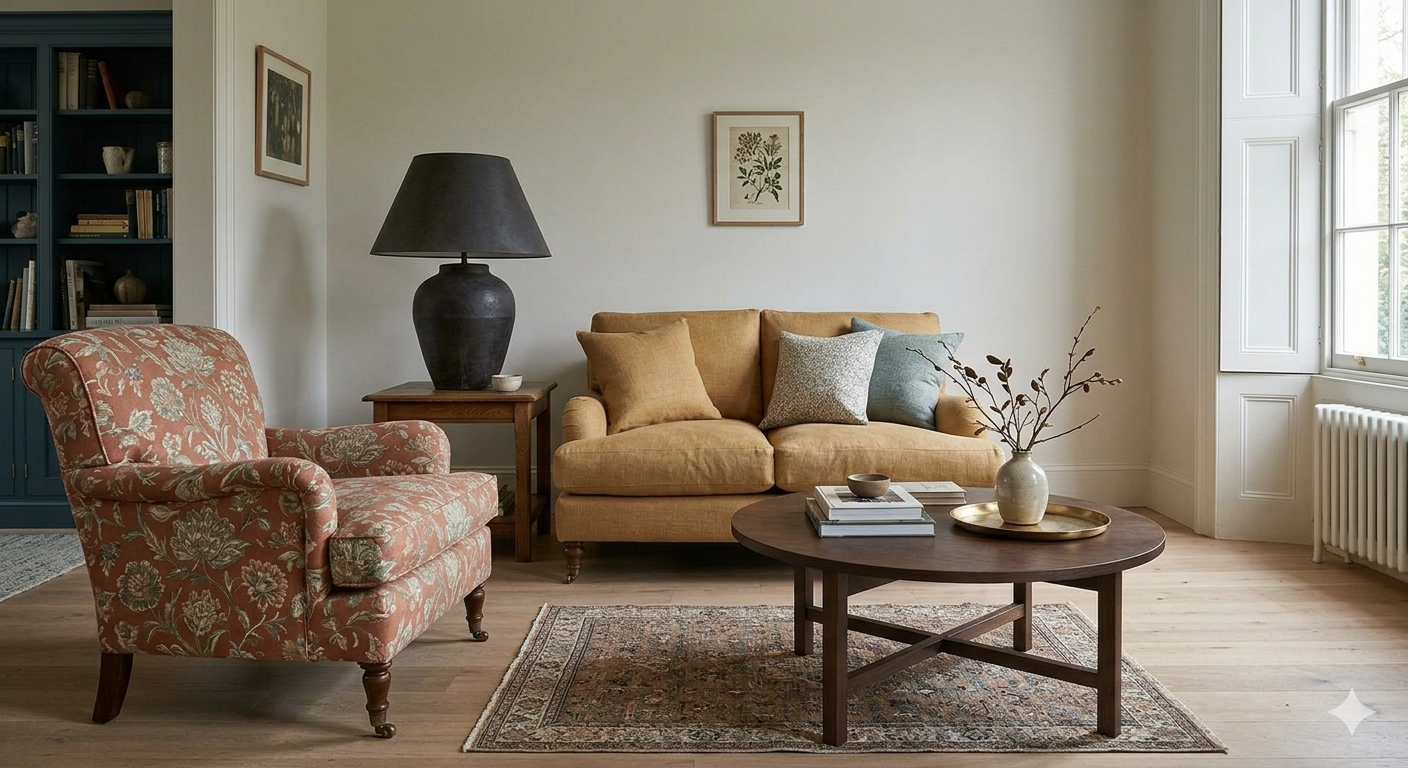
Here we have a very large lamp and a too small rug plus a small sofa in comparison to the chair, which makes this space feel “off”.
You might have walked into a room and felt something wasn’t quite right, even though everything in it is beautiful. The colours work, the furniture is lovely, and yet the space still feels slightly awkward or unfinished.
Most of the time, it isn’t about style or taste.
It’s scale. The image above illustrates a room when the scale is off. We have the tiny rug, the huge table light and the too small sofa.
Scale is one of the most important parts of interior design, and also one of the easiest to overlook. It doesn’t draw attention to itself, but when it’s wrong, you feel it immediately. When it’s right, a room just feels settled.
Scale is about how a room feels
Scale is the relationship between the size of a room and everything in it, furniture, lighting, artwork, and accessories.
When this relationship works, a space feels calm and easy to live in.
When it doesn’t, a room can feel cramped, empty, or slightly uncomfortable, even if every piece on its own is beautiful.
It’s worth saying that scale can be played with creatively once you understand it, but most of the time, getting the basics right makes the biggest difference.
Furniture is usually where it shows first
This is usually where I see scale issues appear straight away.
A sofa that’s too large can take over a room. One that’s too small can make the space feel unfinished. The same goes for beds, tables, and storage. If the proportions are off, the whole room feels slightly unsettled.
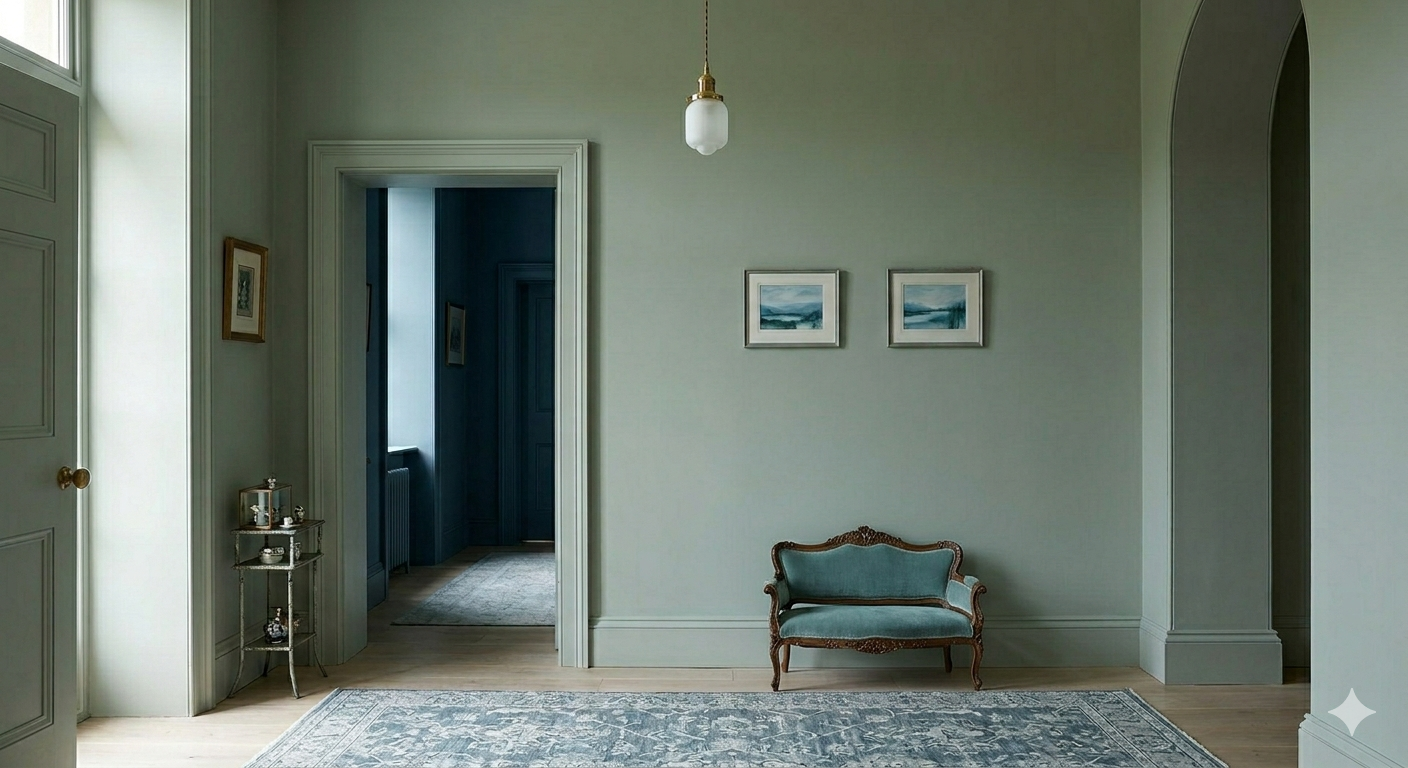
The scale of the sofa is way too small for the space.
Some of the most common issues I see are:
rugs that don’t go far enough under furniture
dining tables that don’t leave enough circulation space
beds that feel too dominant in the room
And then there’s ergonomics, meaning furniture also has to work practically. If heights or proportions are wrong, you don’t just see it, you feel it every day.
Small rooms don’t need small furniture
This is something people often assume, but it usually has the opposite effect.
Too many small pieces can actually make a room feel busier and more cluttered.
In smaller spaces, one well-scaled piece often works far better, such as a proper headboard, a grounded armchair, something that anchors the room properly.
It feels more intentional, not more minimal.
Why scale affects how we feel
We respond to proportion without really thinking about it.
When scale is right, a room feels calm and balanced. When it isn’t, there’s often just a slight feeling that something is off, even if you can’t immediately explain why.
Oversized pieces can feel heavy. Undersized ones can feel lost. The right balance creates ease, which is usually what people mean when they say a room feels “effortless”.
It’s not just furniture
Scale runs through everything in a room.
Artwork that’s too small disappears. Lighting that’s undersized gets lost in higher ceilings. Accessories that are all small can lack impact.
Often, fewer but larger pieces feel more considered than lots of small items competing for attention.
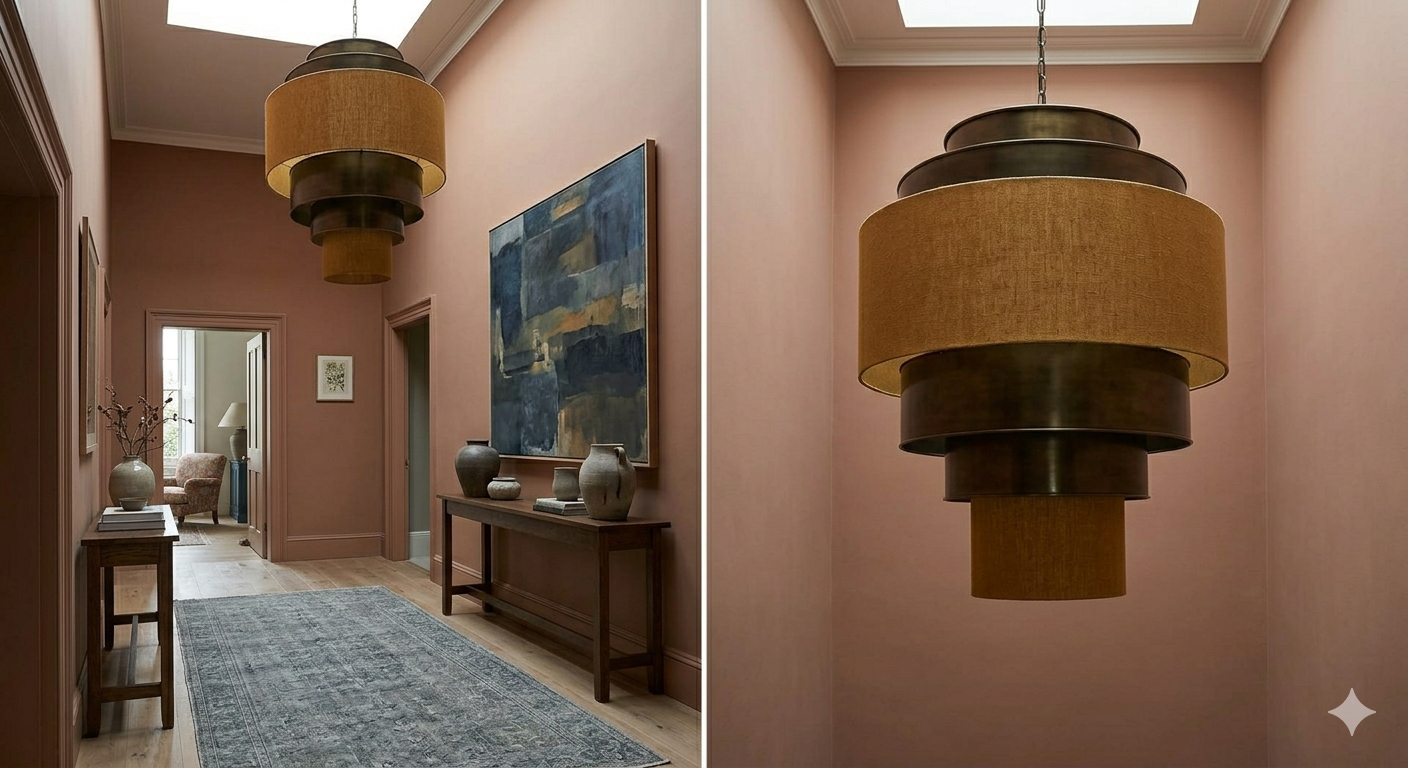
This illustrates how the scale of the pendant is huge compared to the other pieces in the hallway.
Scale vs proportion
These two get mixed up a lot, but they’re slightly different.
Scale is how something relates to the room.
Proportion is how things relate to each other.
A sofa might be the right scale, but still feel slightly off if everything around it is mismatched.
Good interiors consider both together.
Fixing scale without starting again
The good news is, scale issues are usually easier to fix than people expect.
Often it’s about editing rather than replacing:
larger rugs or artwork
removing smaller, unnecessary pieces
adding height through lighting or shelving
simplifying clusters of objects into one stronger element
And just as important is leaving space. Known as “negative space” in the interior design world. Empty space is part of the design too.
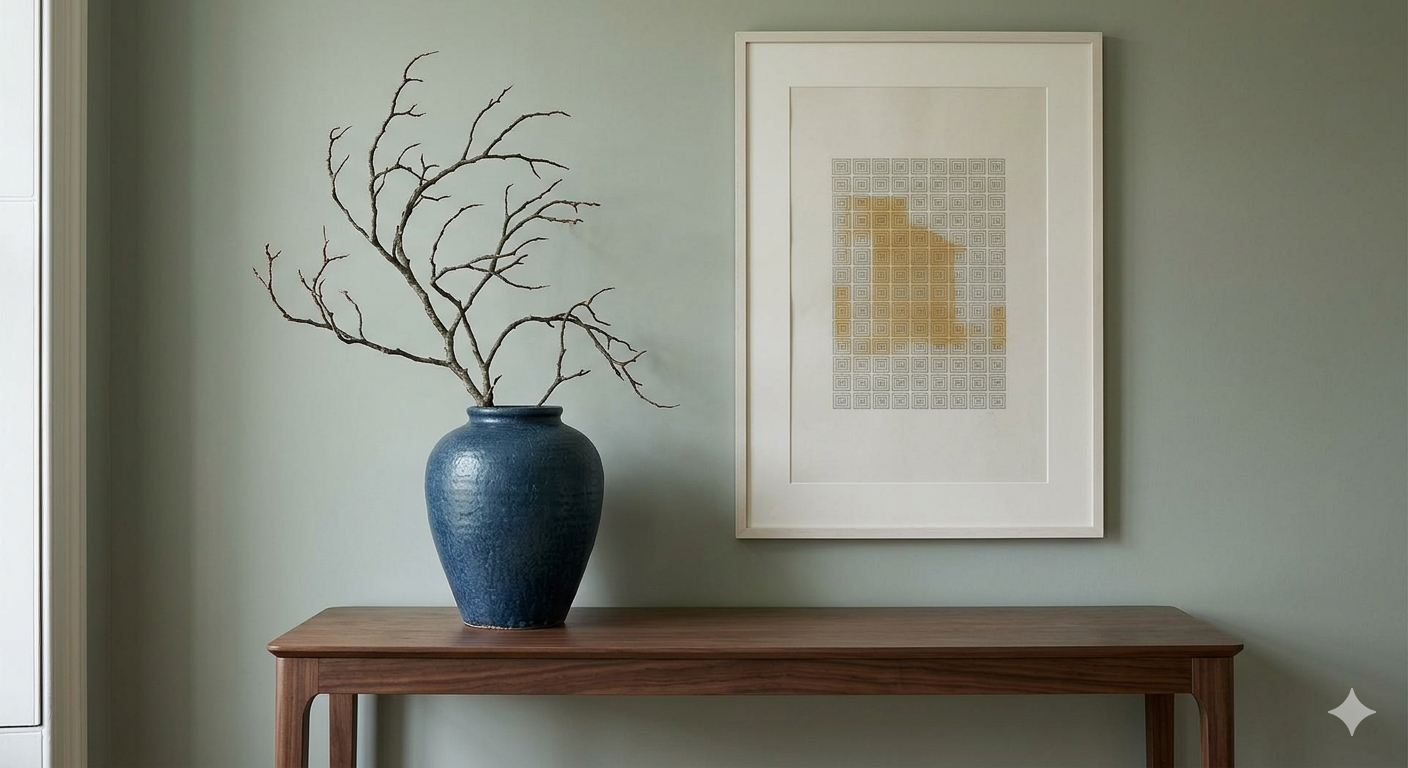
Illustrates the power of “less” if you scale up.
Final thought
Scale is what turns a collection of nice pieces into a room that feels complete.
If something feels almost right but not quite there, it’s often not the colour or the style that needs changing, it’s simply the size and relationship of the pieces to each other.
Ultimately, when you get the scale right, the room simply works.
Images for this article generated by AI.