If you’ve ever looked around at current interior trends and thought, “how did we get here?”, you’re not alone.
And if you’ve ever wondered why certain colours and styles suddenly feel everywhere on Instagram, there is actually a very simple answer.
Interior design is never random. It’s always reacting to what came before it.
Each era responds to the one before it — sometimes gently, sometimes in complete opposition. So if we trace it back, you start to see a pattern in how we’ve arrived at where we are today.
Let’s take a quick journey through it.
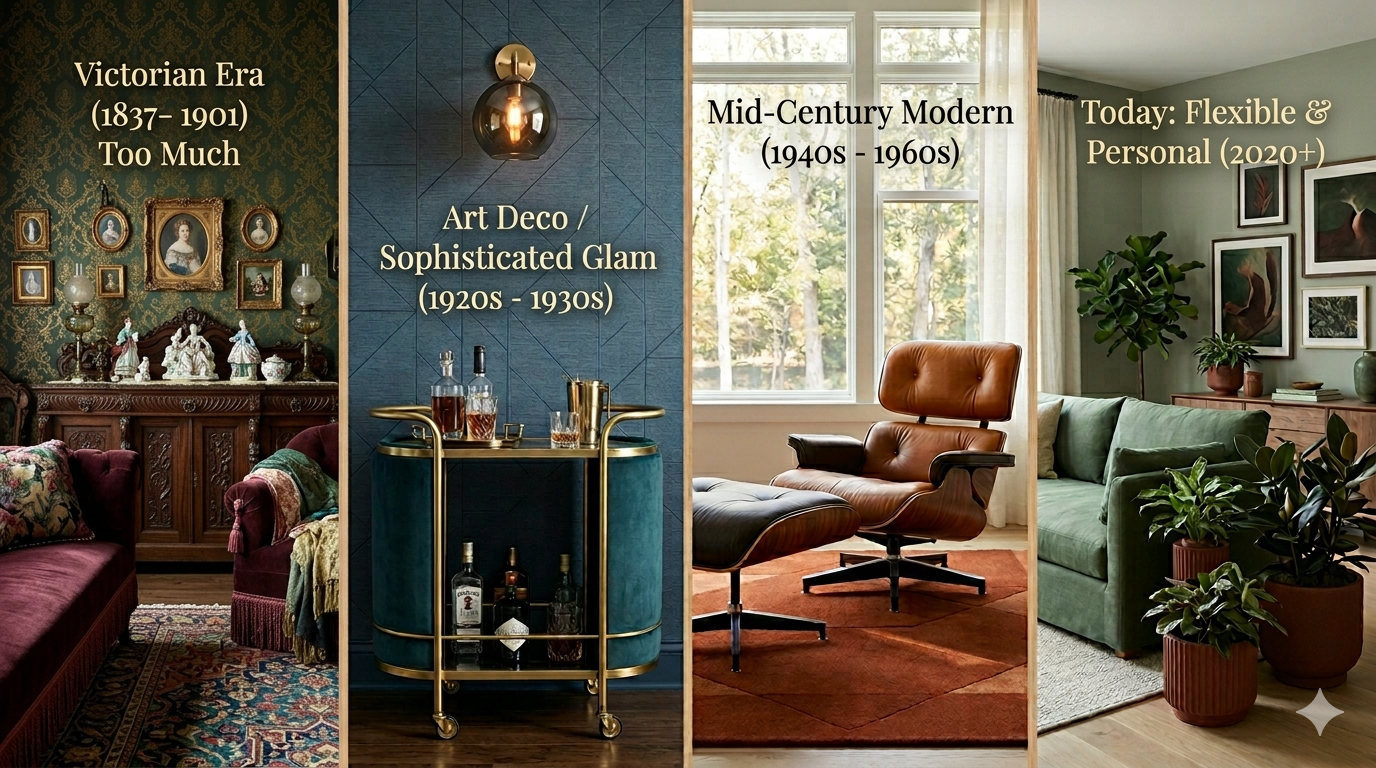
Victorian Era: too much of everything (1837–1901)
Victorian interiors were full, layered, and very decorative. Heavy curtains, patterned wallpaper, ornate furniture, and lots of decorative objects filled every surface.
It was a period that very much celebrated display — homes were designed to show status and wealth.
Beautiful in its own way, but also very busy, and eventually people were ready for something lighter and less formal.
Art Nouveau (1890–1910)
Art Nouveau softened the heaviness of the Victorian era.
It brought in more flowing lines, nature-inspired shapes, and a more organic feel. Everything became a little more fluid and decorative in a different way — less about showing wealth, more about artistry and movement.
Art Deco (1915–1930)
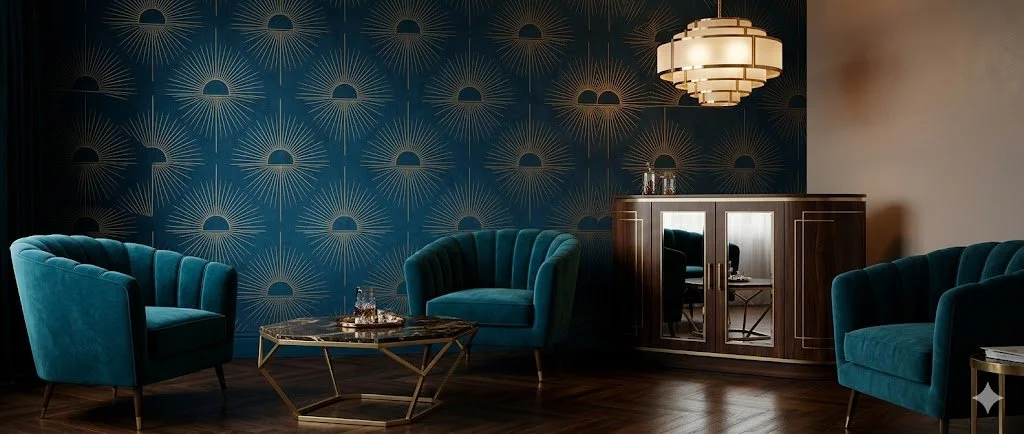
Art Deco moved in the opposite direction again — sharp, structured, and glamorous.
It was influenced by travel, discovery, and rapid industrial change. Think New York skyscrapers, ocean liners, and the excitement of modern life.
Geometric shapes, mirrors, chrome, and bold colour combinations defined this era. It was confident and expressive, but very controlled in its geometry.
Mid-Century Modern (1940s–1960s)
After the war, people wanted homes that were simpler, lighter, and more functional. Design became about ease and practicality as much as beauty.
Materials were limited, so designers worked creatively with what they had — plywood, steel, and glass. At the same time, life was changing socially, and homes had to adapt to new routines.
This is also where we see iconic designers like Charles and Ray Eames, Florence Knoll, Arne Jacobsen, and Hans Wegner, creating furniture that still feels relevant today because it was designed around real life.
The 1970s: earthy, expressive, and relaxed
The 70s moved away from mid-century restraint and brought in warmth, texture, and personality.
Earthy tones like avocado green, mustard yellow, and burnt orange were everywhere. Spaces felt more relaxed, layered, and a little more eclectic.
There was also a stronger global influence — handmade pieces, textiles, and a more collected feel started to appear in homes.
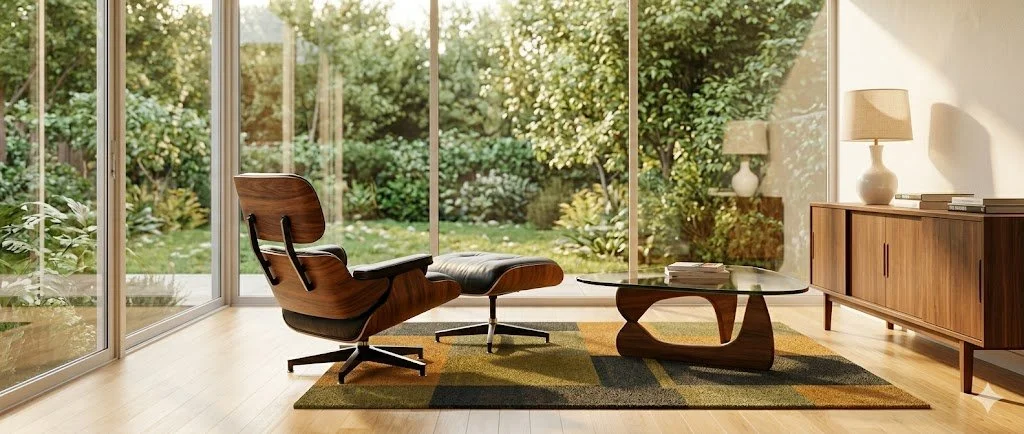
The 1980s: bold, glossy, and confident
The 80s were unapologetic.
This was a time of ambition and excess, reflected in interiors that were shiny, bold, and expressive. Brass, mirrors, high-contrast colours, and strong patterns were everywhere.
Homes became statements — very different from the softer, earthier 70s that came before.
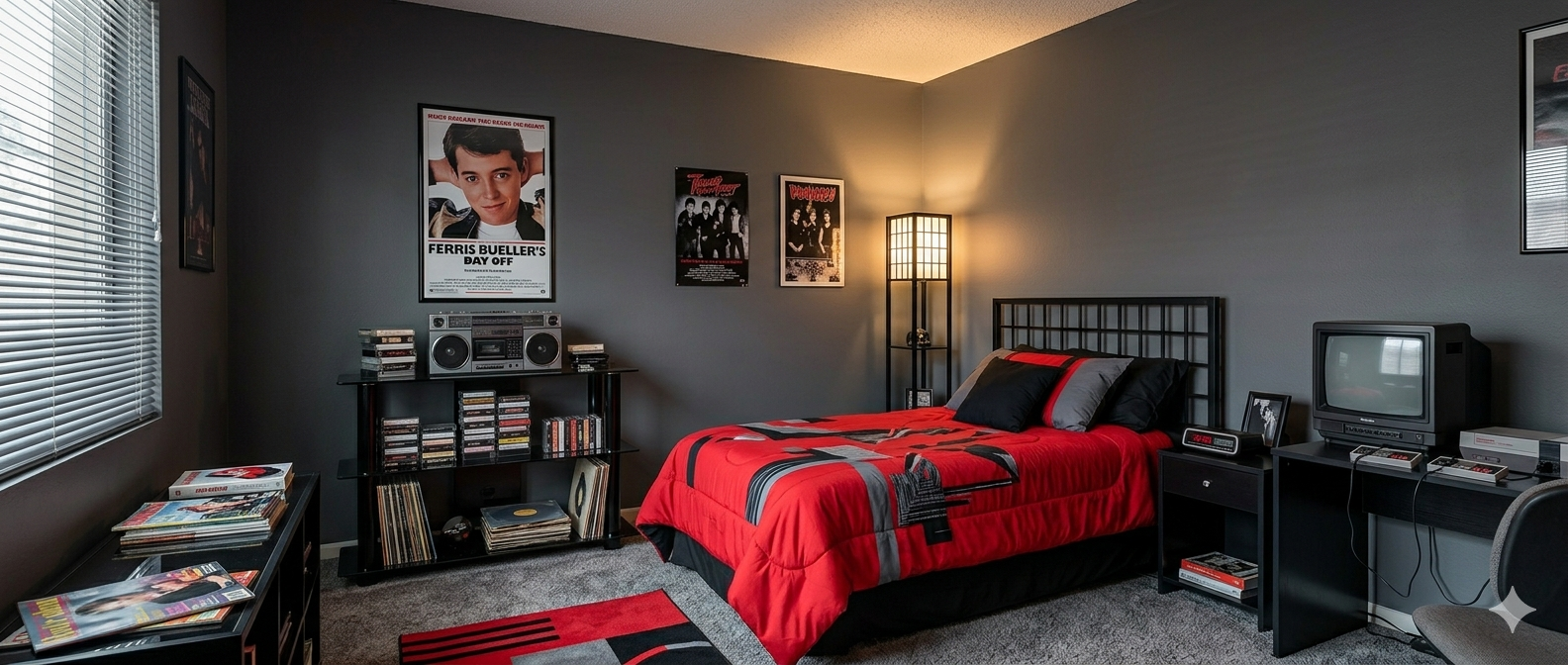
The 1990s: calm and stripped back
After the intensity of the 80s, the 90s moved towards calm.
Interiors became simpler, more neutral, and less visually busy. Beige, taupe, and soft greys created a sense of order and quiet.
It was a clear shift back towards simplicity and restraint.
The grey era (2000s–2020): minimal taken further
The 2000s and 2010s took minimalism further.
Grey became the dominant neutral — used on walls, sofas, kitchens, and everything in between. It was clean, consistent, and safe.
But over time, many spaces began to feel quite flat and lacking warmth, which naturally led to a shift again.
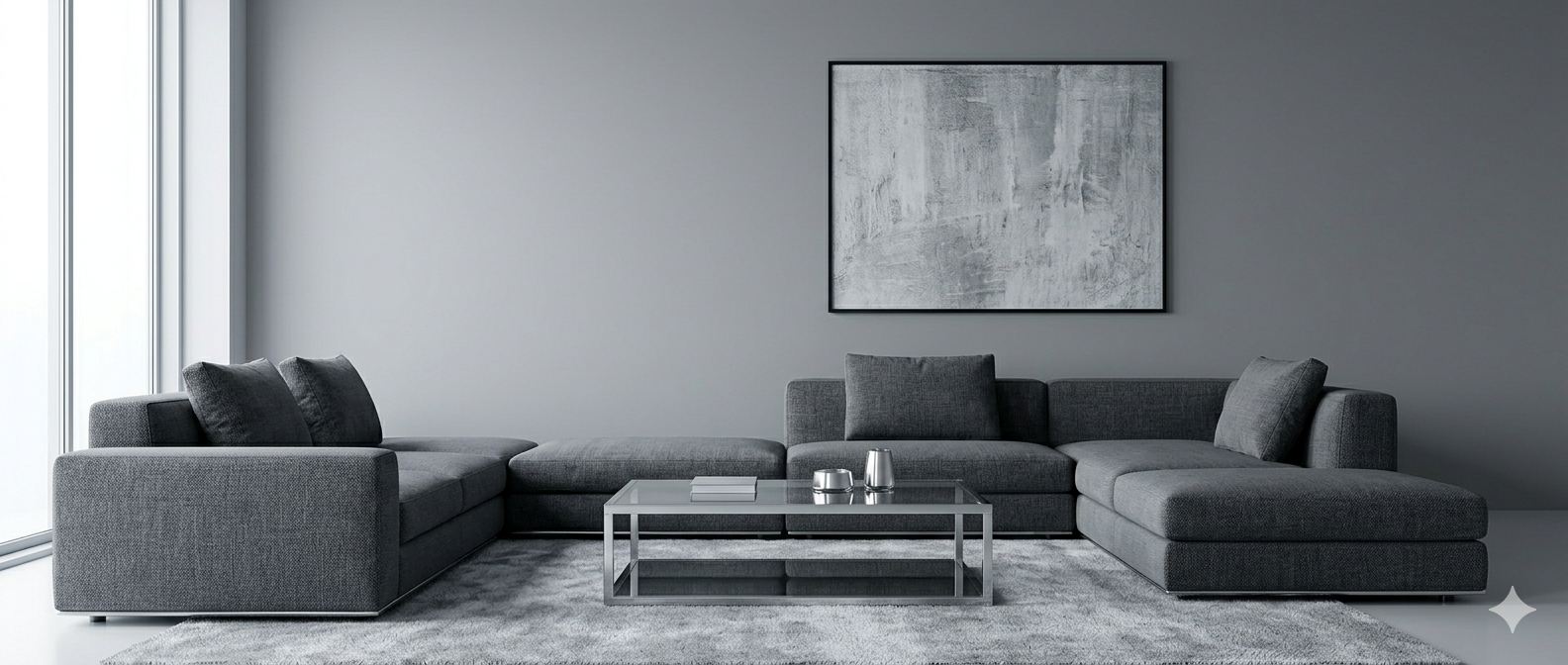
Covid era (2020–2021): homes had to work harder
Lockdown changed how we used our homes almost overnight.
They became offices, schools, gyms, and relaxation spaces all at once. Comfort became essential, and interiors softened as a result.
We saw warmer lighting, softer furniture, and more focus on wellbeing and practicality rather than purely aesthetic decisions.
Post-Covid: nature coming back in
After spending so much time indoors, there was a natural pull towards the outside world.
Natural materials, plants, texture, and daylight became more important again. Homes started to feel more grounded and connected to nature.
It was a clear reaction to both grey minimalism and the intensity of lockdown living.
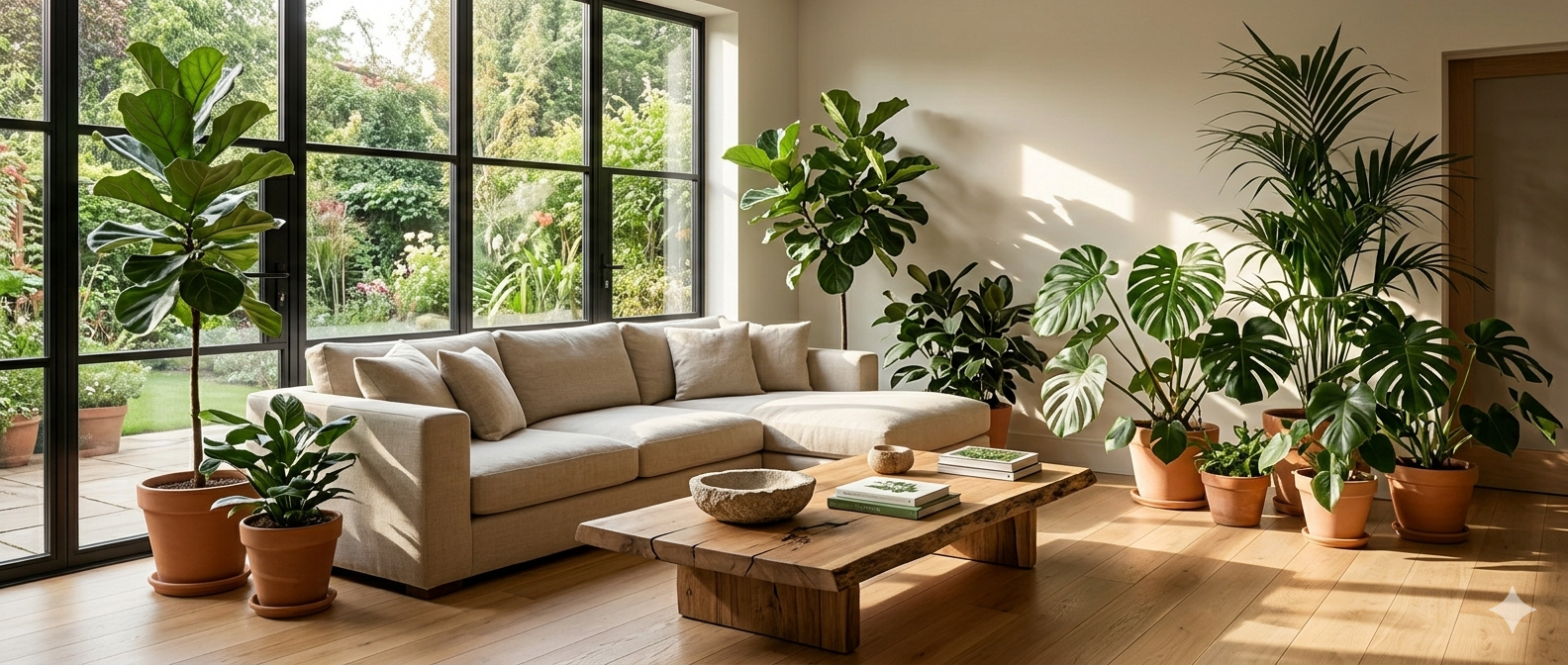
Today: personal, flexible, and less prescriptive
Right now, there isn’t one dominant style and that feels quite freeing.
Some homes are full of colour and pattern, others are calm and neutral. Most sit somewhere in between.
What feels different now is that people are designing for themselves rather than for a trend. It’s less about following a rule, and more about creating a home that actually works for how you live.
And that shift feels like the most interesting one yet.
Images for this blog generated by AI.