

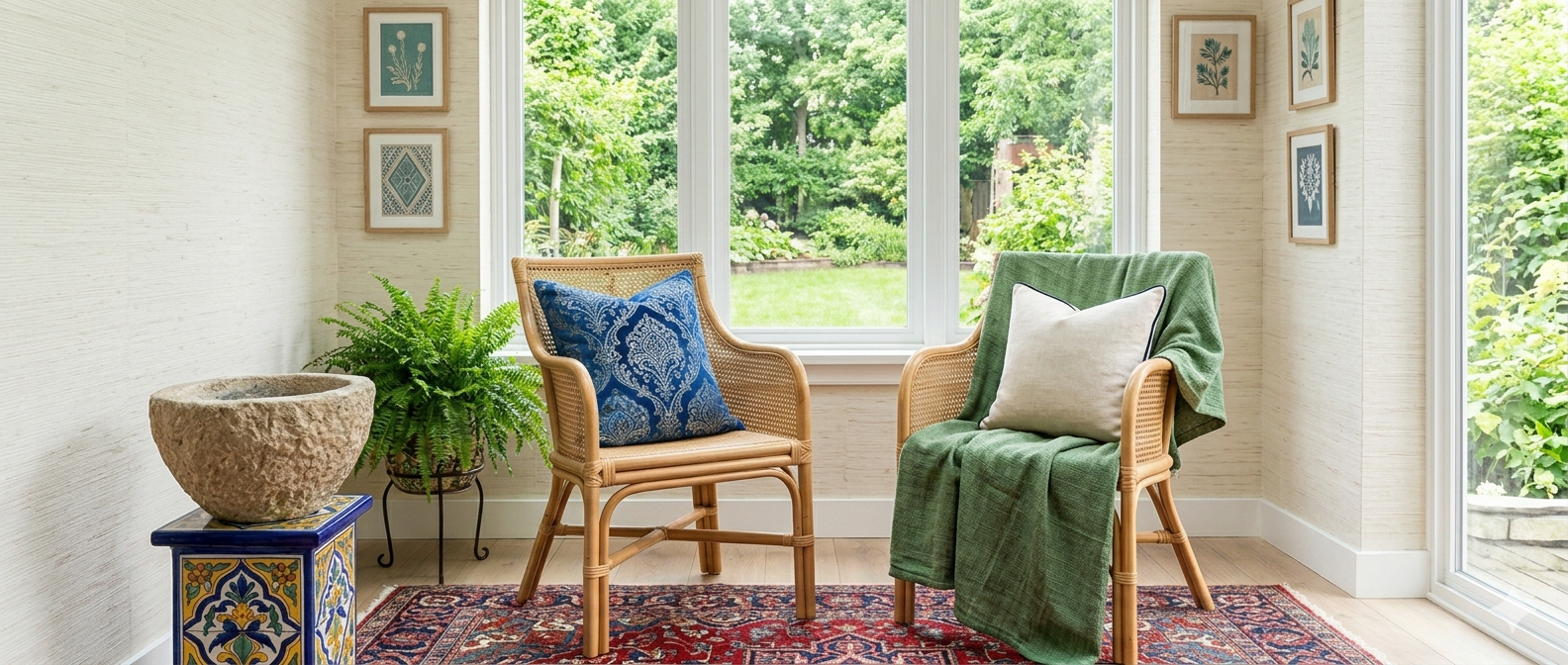
For a lot of people I work with, pattern is one of the most intimidating parts of interior design. Colour usually feels manageable, and neutrals feel safe. But pattern is often where people hesitate - it can feel like it might tip a room into something too busy or not quite right.
In reality, pattern is much simpler than it’s often made out to be. When you start to understand it, it becomes one of the most useful tools for bringing a space together.
Let’s look at it in a straightforward way.
Pattern is really just repetition
At its core, pattern is simply the repetition of lines, shapes, textures, or motifs.
Stripes repeat lines. Checks repeat squares. Florals repeat organic forms.
It’s something we naturally respond to. There’s a rhythm to it, and that rhythm is what gives a space a sense of order.
Pattern only starts to feel overwhelming when too many things are competing, or when there isn’t enough balance in how it’s used.
You’re already living with it
One thing I often point out to clients is that they’re already comfortable with pattern they just don’t think of it that way.
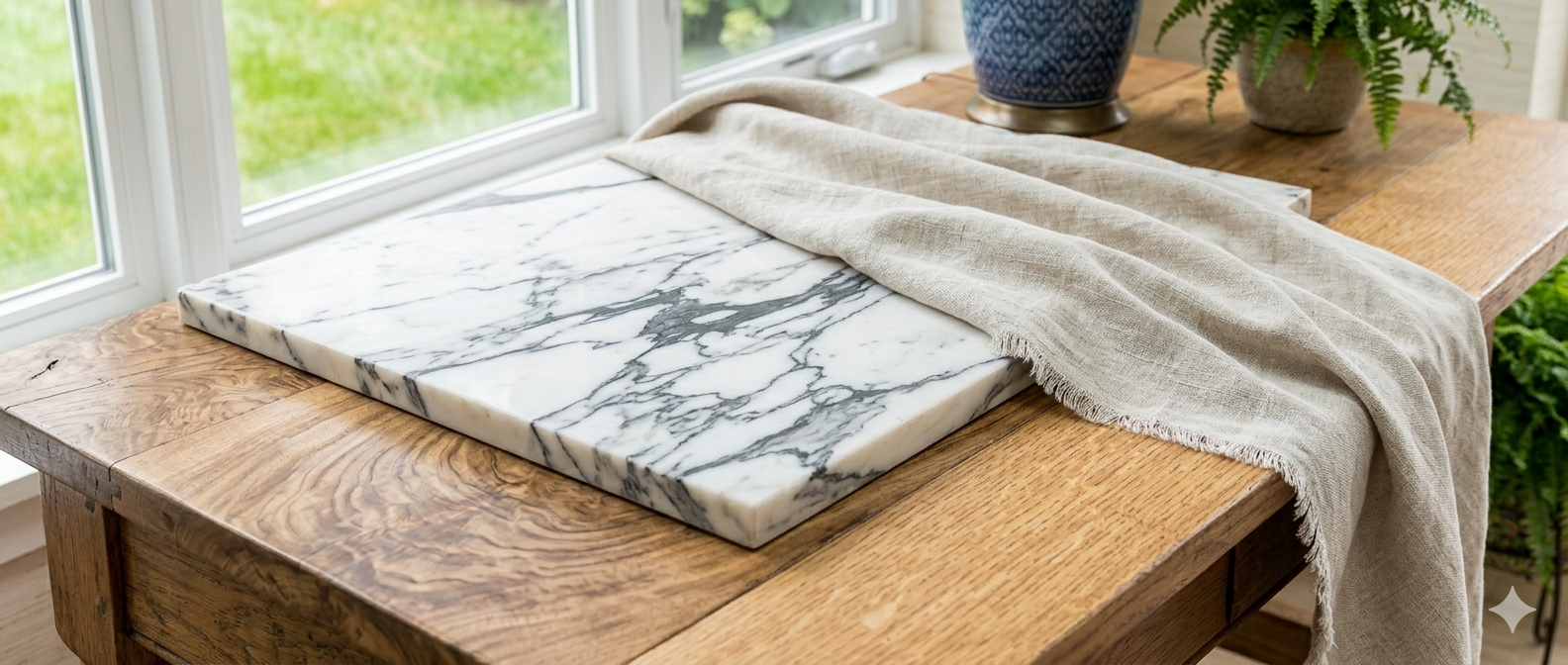
Wood grain, marble veining, brickwork, woven fabrics, linen, rattan - yes, all of these are pattern.
Because they’re familiar, we don’t question them. They just feel like part of the furniture.
So in most homes, pattern is already there. It’s just about noticing it differently.
It doesn’t have to mean bold choices
There’s a tendency to think that using pattern means committing to something strong or permanent, but it really doesn’t work like that.
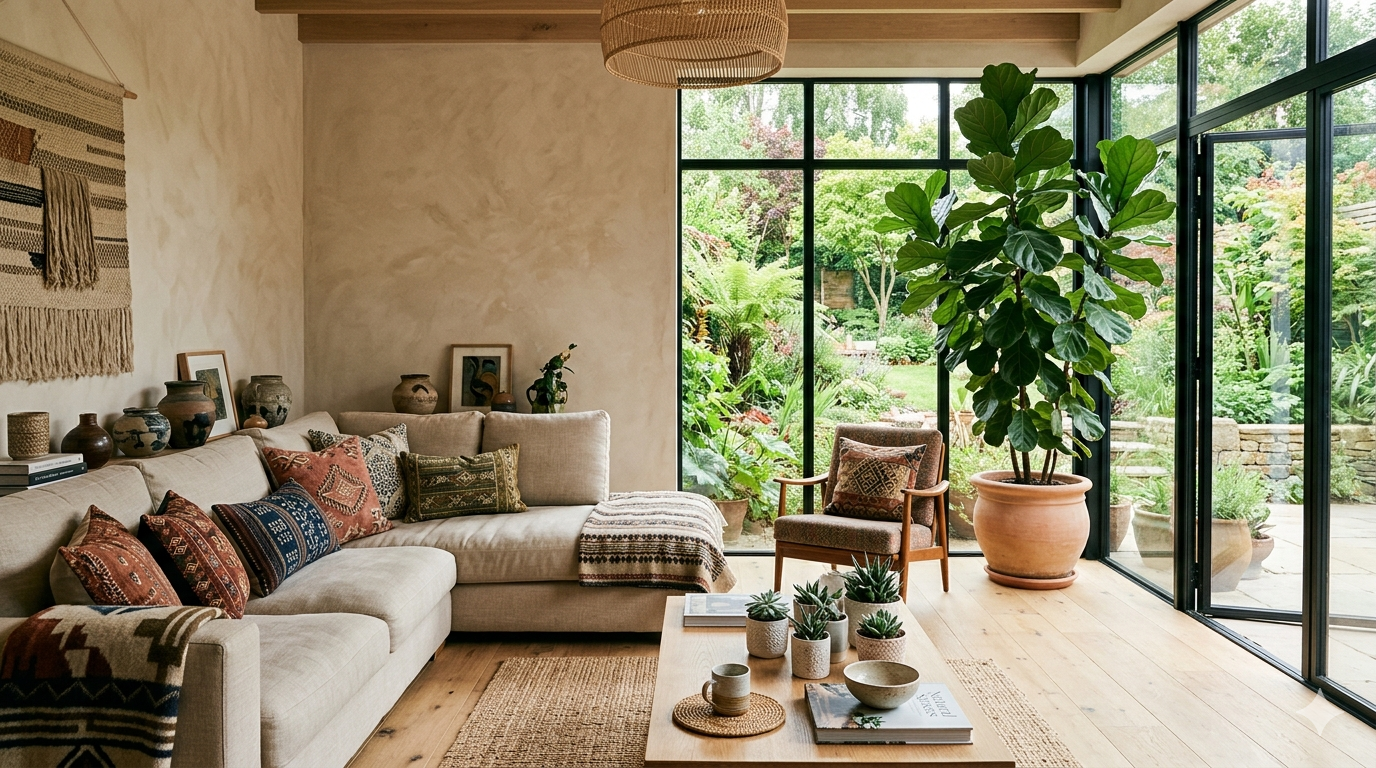
Most of the time, I introduce pattern through the softer layers in a room — cushions, rugs, throws, lampshades, bedding, artwork.
These are easy to build up or change over time. You can try things, adjust them, or take them out if they don’t feel right.
It’s rarely a fixed decision. It evolves.
Neutral rooms often rely on it
Some of the calmest spaces I design are actually the ones where pattern is doing a quiet amount of work in the background.
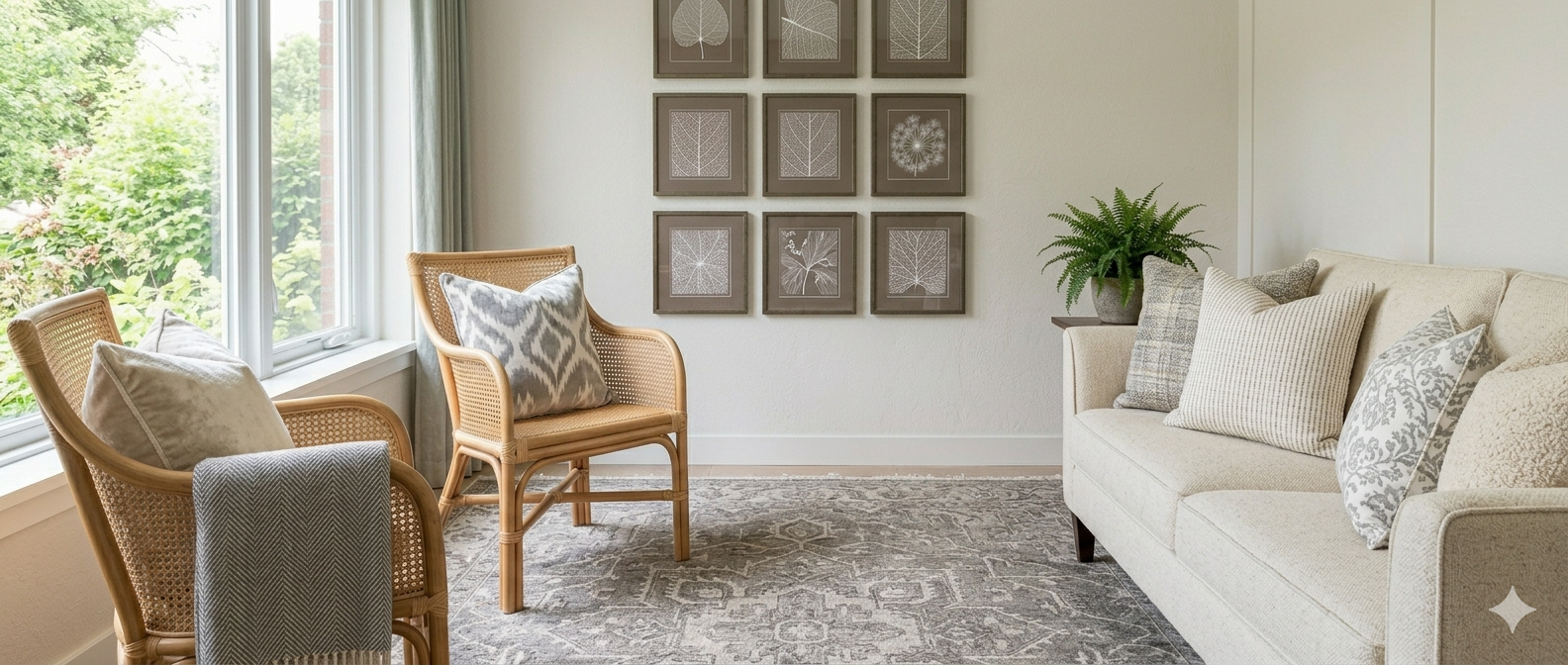
Without it, neutral rooms can sometimes feel a bit flat or unfinished. Pattern adds variation and depth without changing the overall palette.
Even something subtle like a weave, a stripe, or a soft print can shift how a room feels once it’s layered in.
Scale is what makes it work
When pattern feels “too much,” it’s usually because everything is sitting at the same level.
I tend to think about it quite simply:
one larger pattern (rug, curtains, statement piece)
one medium pattern (cushions, upholstery)
one smaller detail (cushions, accessories or artwork)
This gives everything structure. The room feels more settled because there’s a clear hierarchy.
Pattern adds personality in a different way to colour
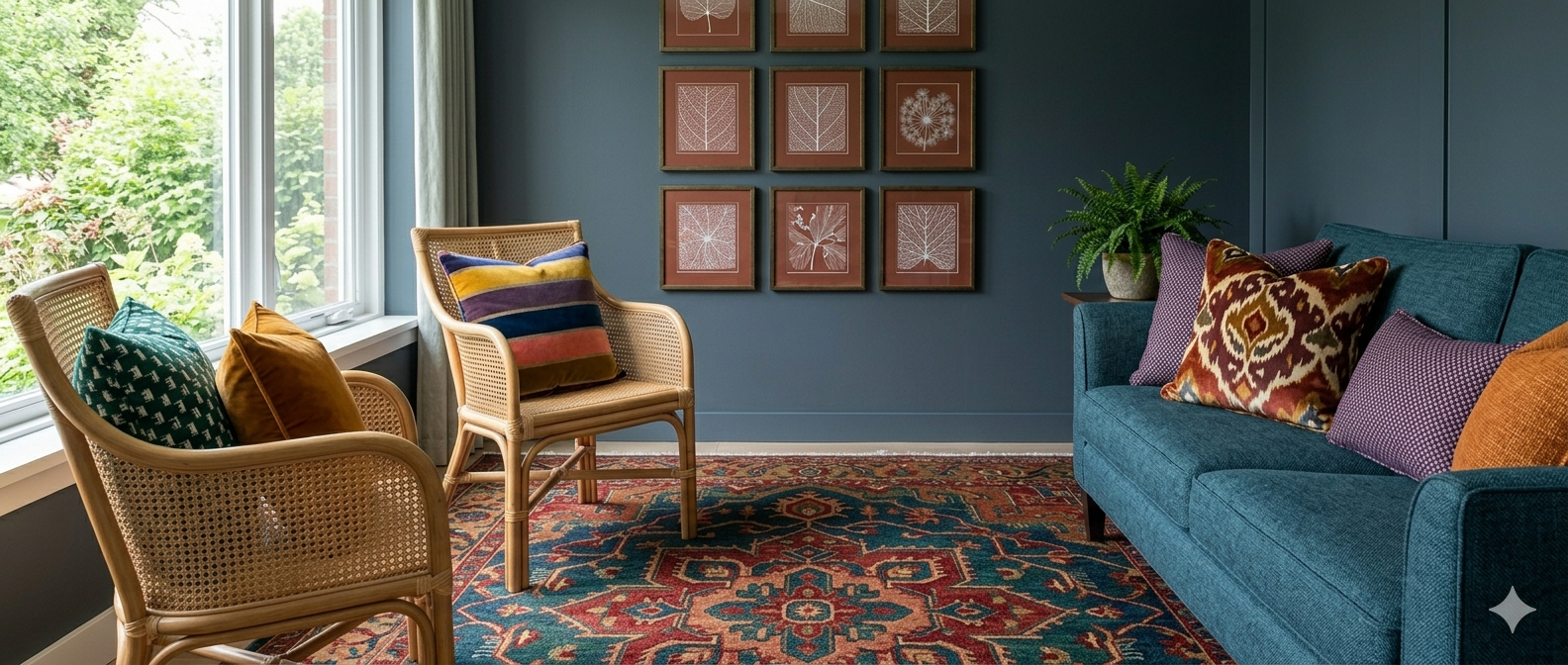
Colour sets the tone of a space, but pattern is often what gives it character.
It introduces movement, contrast, and a sense of individuality. Even with a very restrained colour palette, pattern can completely change how a room feels.
It’s often what people remember, even if they can’t immediately say why.
I often come back to nature
When people feel unsure about pattern, I usually bring it back to nature.
Outside, everything is patterned — leaves, stone, water, bark. But it never feels overwhelming, because it’s naturally balanced.
That’s usually what I’m trying to achieve in interiors too. I don’t want everything competing, I want layers sitting comfortably together.
It’s rarely really about pattern
In my experience, it’s not actually pattern people are worried about, it’s the fear of making a mistake.
But homes don’t need to be perfect. They need to feel like they work for the people living in them.
If something feels right to you, there’s usually a way to make it work in the space.
Final thought
Pattern isn’t something you have to get right or wrong. It’s just another way of adding warmth, depth, and interest to a home.
Start small. Build it gradually. Let it develop through the pieces you naturally gravitate towards.
And most importantly, trust your instincts your home should feel like yours, not like a set of rules.
Images for this article generated by AI.